News CenterNews
Home>News Center
Normalizing Rolling
2026-07-31
Basic Definition
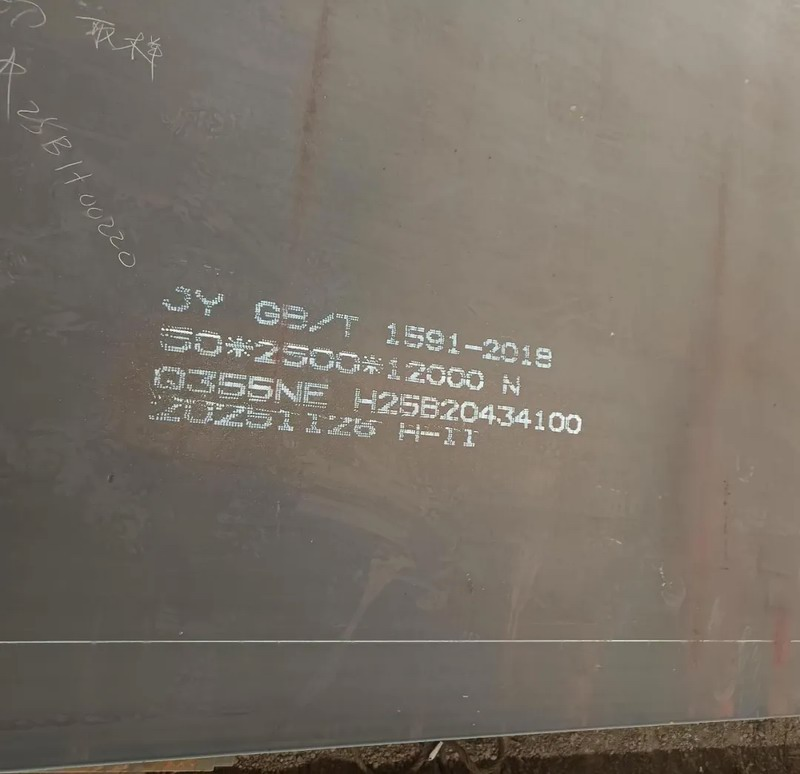
Normalizing rolling (Code: N, Normalizing rolled) is a production process that precisely controls the final rolling temperature and deformation amount to complete the final rolling deformation of steel within a specific temperature range.
This process relies on the residual heat of rolling to directly generate a metallographic structure and mechanical properties on the rolling production line that are equivalent to normalizing heat treatment in a separate furnace. After rolling is completed, there is no need for additional off-line furnace normalizing treatment before delivery.
Its delivery condition allows for accelerated cooling or accelerated cooling + air tempering heat treatment, but excludes direct quenching or quenching + tempering processes.
In international literature, "Controlled Rolling" is the umbrella term. Both Normalizing Rolling and TMCP (Thermo-Mechanical Controlled Processing) belong to the category of controlled rolling and need to be distinguished based on product usage requirements.
Purpose of Origin and Application Significance
Hot-rolled wide strip steel is used for hydraulic precision steel pipes, oil transmission pipes, long-distance pipeline steel, vehicle frame components, pressure vessel steel plates, and general mechanical structural parts. Many welded components require the steel to have the performance characteristics of a normalized state.
If the traditional route of "conventional rolling + subsequent off-line furnace normalizing" is adopted, production energy consumption is high, and the lead time is long. Normalizing rolling integrates the normalizing effect into the rolling process, offering the following advantages:
1. Saves production energy and improves the factory production environment;
2. Shortens the overall production cycle and reduces manufacturing costs;
3. Eliminates obvious internal segregation and banded structures within the steel;
4. Makes the produced steel easier for downstream customers to process directly.
Core Process Principle & Implementation Method
Logic of traditional off-line normalizing process: Heat the steel to slightly above the Ac3 phase transformation critical point, hold for a short time, and then cool naturally in still air to obtain a fine-grained, un-work-hardened austenitic structure.
Normalizing rolling replicates this metallurgical logic. The core control points are:
1. Set the final rolling temperature above the steel's recrystallization temperature and near the Ac3 phase transformation critical point;Temperature Control:
2. Match the preset final rolling deformation amount to allow the deformed austenite to fully undergo recrystallization and grain refinement;Deformation Control:
3. Air cool after rolling is complete (can be paired with moderate accelerated cooling) to finally form a uniform and fine ferrite-pearlite structure, thoroughly weakening the banded structure defects caused by steel rolling.Cooling Process:
Essential Difference: Ordinary hot rolling is only responsible for steel forming; separate off-line normalizing is an independent heat treatment process; whereas normalizing rolling completes the final rolling deformation during the austenite recrystallization stage, relying on deformation-induced recrystallization to break up coarse grains, and finally achieves an equivalent normalizing effect through air cooling.
Summary of Core Features
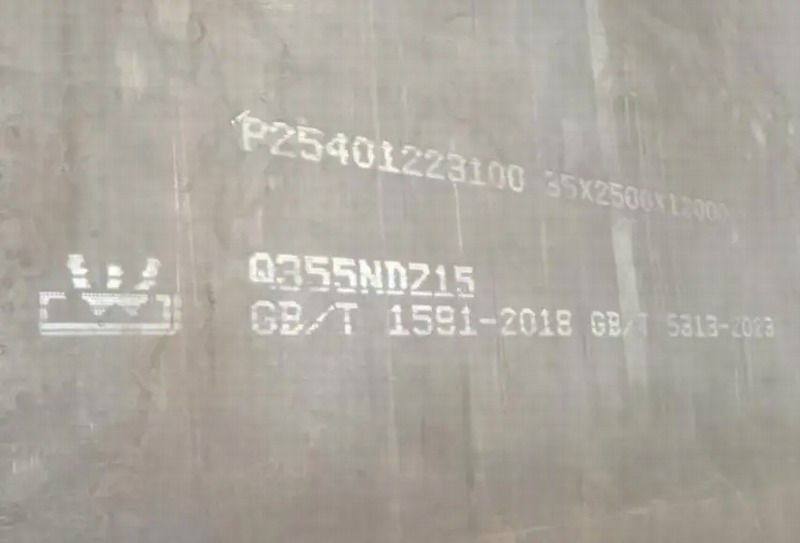
1. An integrated thermo-mechanical treatment process that relies on rolling residual heat to achieve grain refinement and structural homogenization, commonly summarized as "replacing normalizing with rolling";Process Essence:
2. Replace the old "rolling completion + separate furnace normalizing" process. While reducing costs and increasing efficiency, it eliminates banded structures and composition segregation in steel, obtaining a uniform fine-grained ferrite-pearlite metallographic structure;Core Goal:
3. International generic delivery condition code N;Delivery Mark:
4. Distinguished from TMCP thermo-mechanical rolling—Normalizing rolling benchmarks against traditional normalizing performance; TMCP rolling can break through the performance upper limit of conventional heat treatment.Boundary Distinction:
Performance Advantage Comparison
1. Significantly improves high and low-temperature impact toughness, has superior welding performance, and achieves a more balanced match between steel strength and toughness;Compared to ordinary hot-rolled steel:
2. Shorter production cycle, lower comprehensive production cost, and less energy consumption.Compared to traditional separate furnace normalized steel:
Scope of Application & Application Examples
Applicable Scenarios
Suitable for steel products with relatively high requirements for comprehensive mechanical properties and welding performance, such as structural steel, pressure vessel steel plates, and pipeline steel. Execution standards include DIN1700, EN 10025-3, EN 10149-1, and other European and American system steel standards.
Practical Application
In recent years, a large volume of general-purpose structural hot-rolled wide strip steel on the market has been mass-produced using the normalizing rolling process in accordance with the DIN1700 standard; it is also widely used as base material for key components such as pressure vessel components, engineering machinery frames, oil and gas transmission steel pipes, and precision hydraulic pipe fittings.