
News CenterNews
Home>News Center
Quenching and Tempering (Quenching + Tempering)
2026-07-31
In the field of steel processing, quenching and tempering treatment is the core process that endows medium-carbon structural steels with a combination of high strength and toughness. According to the national standard GB/T 16270-2009, Quenched and Tempered Steel Plates for High Strength Structures, quenched and tempered steels achieve a precise balance between strength and toughness through the dual heat treatment of “quenching + high-temperature tempering,” serving as an indispensable material foundation for engineering machinery, pressure vessels, bridge construction, and other fields.
I. Process Essence: The Transformation from “Hard and Brittle” to “Strong and Tough”
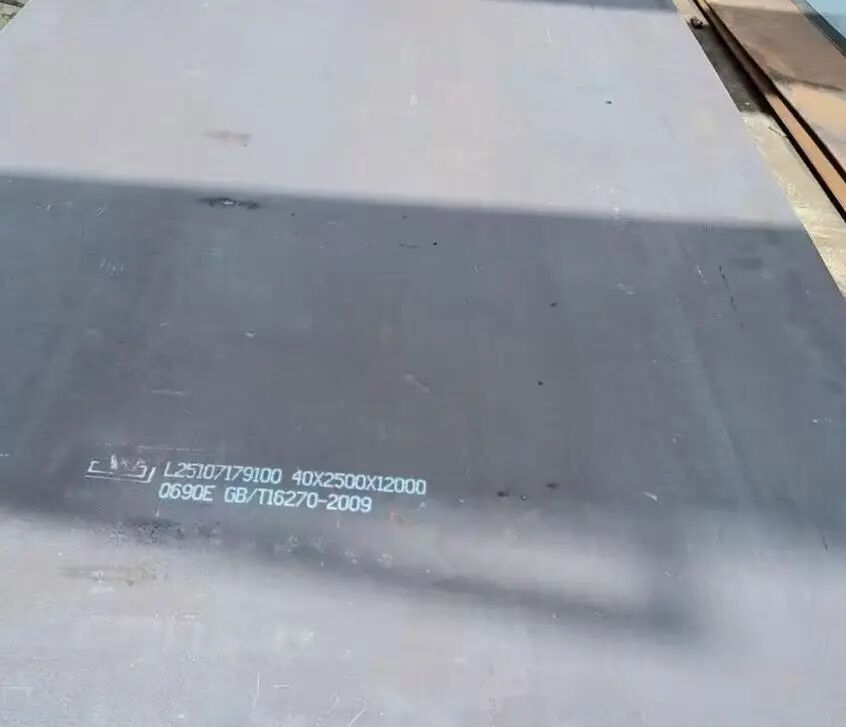
The core logic of quenching and tempering treatment is to alter the internal microstructure of steel through heat treatment. The quenching stage involves heating the steel to a critical temperature (Ac3 + 30~50℃ for hypoeutectoid steels, and Ac1 + 30~50℃ for hypereutectoid steels) followed by rapid cooling to form a martensitic structure that possesses high hardness but significant brittleness. Subsequently, high-temperature tempering (500-650℃) transforms the martensite into tempered sorbite through atomic diffusion and carbide precipitation. This microstructure not only retains high strength (tensile strength can reach over 690 MPa, meeting the requirements for grades such as Q690D in GB/T 16270-2009) but also exhibits excellent plasticity and impact toughness (impact energy at -20℃ ≥ 47 J).
II. Key Process Control Points under the National Standard Framework
GB/T 16270-2009 imposes strict regulations on the chemical composition, mechanical properties, and process parameters of quenched and tempered steel plates. Key focus areas in production include:
Composition Design: Based on low carbon (C ≤ 0.20%) and microalloying (addition of Nb, V, Ti, etc.), grain refinement is achieved through controlled rolling and controlled cooling to establish the microstructural foundation for quenching and tempering treatment;
Selection of Quenching Medium: Depending on the plate thickness and hardenability, water, oil, or polymer solutions are used for cooling to ensure that the core obtains a martensitic structure of ≥ 90%;
Precision of Tempering Temperature: For different grades (e.g., Q550D, Q690D), the tempering temperature must be strictly controlled within the range of 580-650℃ to avoid the second type of temper embrittlement (steel grades containing alloying elements such as Cr and Ni require rapid cooling through the embrittlement zone).
II. Application Scenarios: From “General Structures” to “Extreme Operating Conditions”
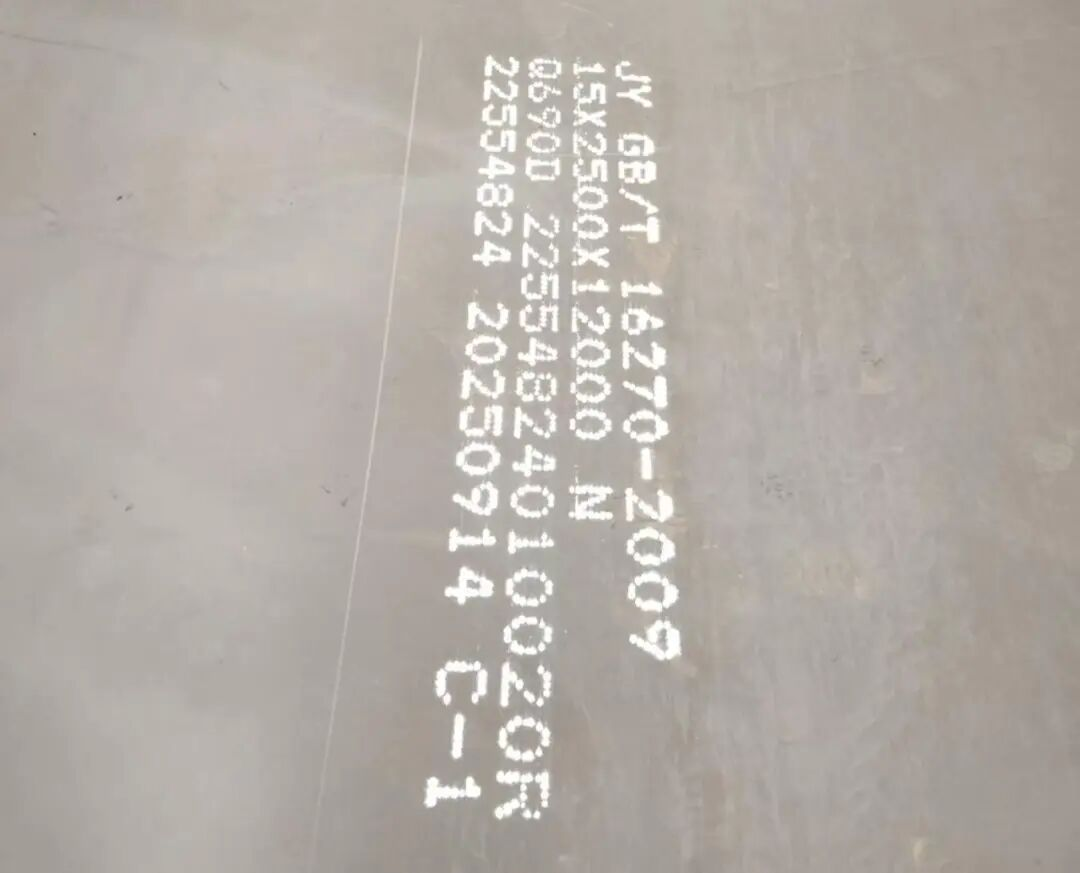
The application of quenched and tempered steels has long broken through the boundaries of traditional mechanical parts and is extending into high-end fields driven by national standards:
Engineering Machinery: Crane booms and excavator dipper sticks utilize Q690D quenched and tempered plates, achieving a 30% weight reduction while withstanding 2 million cycles of alternating loads;
Energy Equipment: Wind power tower flanges and nuclear power pressure vessel supports rely on the low-temperature toughness and hydrogen embrittlement resistance of quenched and tempered steels;
Special Vehicles: Armor plates for armored vehicles achieve dual functions of “ballistic protection + impact resistance” through quenching and tempering treatment, with surface hardness reaching over HRC 45.
IV. Process Innovation: From “Experience-Driven” to “Data-Empowered”
Modern steel mills have introduced intelligent control systems when producing quenched and tempered steels:
Heating Furnace Temperature Control: Walking-beam heating furnaces combined with infrared temperature measurement are adopted to ensure a temperature difference of ≤ 10℃ across the entire length of the steel plate;
Quenching Uniformity: The water pressure is dynamically adjusted through laminar cooling devices to solve the problem of insufficient core cooling rates in thick plates (≥ 50 mm);
Performance Prediction Models: Based on machine learning algorithms, mechanical properties under different tempering parameters are simulated in advance to reduce trial-and-error costs.
V. Industry Value: Balancing Green Manufacturing and Performance Upgrades
The implementation of GB/T 16270-2009 has propelled the production of quenched and tempered steels toward a transformation of “short processes and low energy consumption”:
Controlled Rolling Replacing Partial Heat Treatment: Grain refinement is achieved through deformation-induced phase transformation, reducing the quenching heating temperature by 20-30℃;
Waste Heat Tempering Technology: Utilizing residual heat after rolling for direct tempering treatment achieves an energy-saving rate of over 15%;
Scrap Steel Recycling: The combination of electric arc furnace smelting and LF refining processes increases the scrap steel ratio for quenched and tempered steels to 80%, reducing carbon emissions by 40%.
Quenching and tempering treatment is not only an “amplifier” for steel performance but also the “cornerstone” of manufacturing industry upgrades. With the continuous improvement of the national standard system and ongoing process innovations, quenched and tempered steels are supporting the backbone of major national equipment with a posture that is lighter, stronger, and tougher.